Restoring Two Historic Murals by Loïs Mailou Jones at Sasha Bruce House
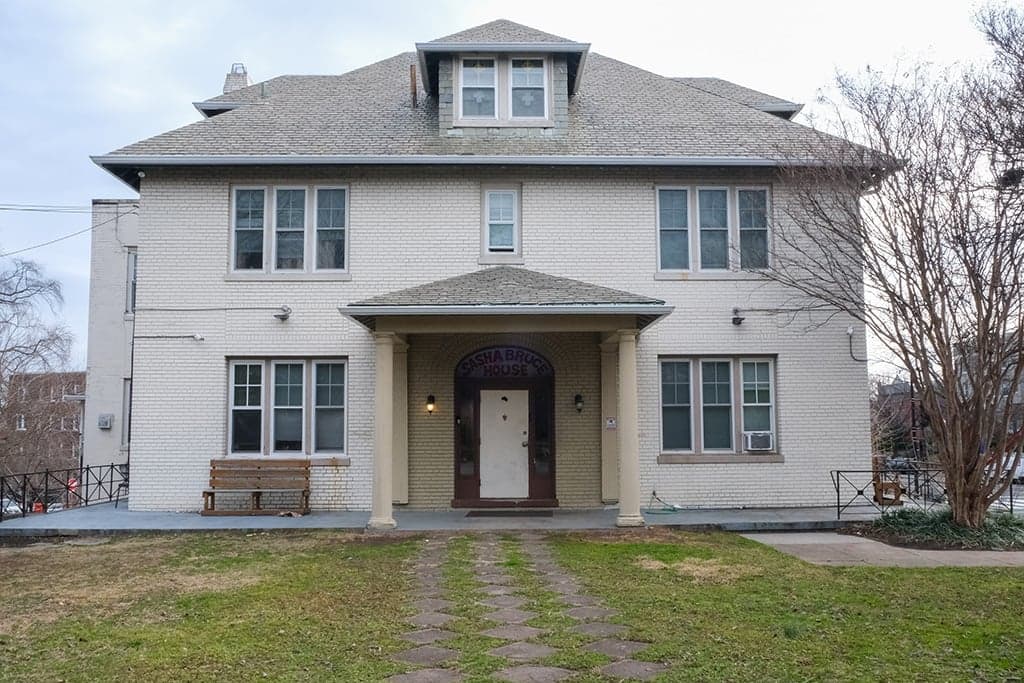
Help support the restoration of two large murals by the artist Loïs Mailou Jones at Sasha Bruce House, the only emergency shelter for youth under eighteen in the District of Columbia.
Half of the money will go to the cost of treating the murals, a major endeavor taking up to four months and requiring the use of toxic chemicals and obstructive scaffolding. The remaining money will go to the cost of relocating the youth who reside at Sasha Bruce House during the treatment’s duration.
We gladly accept donations by check. Please make your check payable to Lois Murals
(or Sasha Bruce Youthwork with "Lois Murals Project" noted in the memo line) and mail it to:
Attn: Lois Murals
Sasha Bruce Youthwork
741 8th Street SE, Washington, DC 20003
______________________________________________________________________________________
Why Conservation Is Essential
The murals date from the 1950s, and subsequent decades of wear, water damage, and building modifications have taken a toll on them. They have suffered paint losses, deep scratches, and abrasion. They were also once extensively overpainted, such that large areas of the artist’s original oil paint are now obscured. Fortunately, whoever did the overpainting used acrylic paint, which can be easily removed without harming Jones’s underlying oil paint. Sasha Bruce Youthwork is committed to carrying out a comprehensive conservation treatment, restoring these important murals to their full glory.
About the Murals
Jones created the Africa and Ghana murals at the request of Nannie Helen Burroughs, the legendary educator, civil rights leader, and founder of the National Training School for Women and Girls. At the time, the building served as a retreat for foreign Baptist missionaries. Burroughs understood the importance of visual storytelling and commissioned Jones to create works honoring African history, progress, and global connection. Together, the murals stand as singular works that link African American intellectual history, Pan‑African thought, and mid‑20th‑century Black artistry.
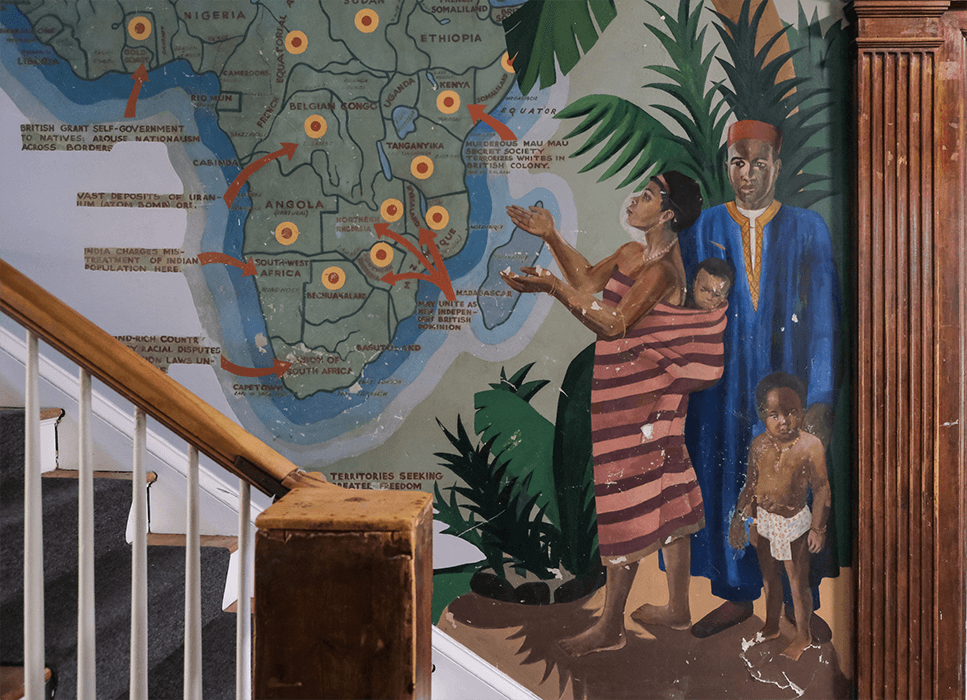
Mural Africa
Africa traces past, present, and future across the African continent, blending symbolism, geography, and human figures to tell a story of endurance and possibility.
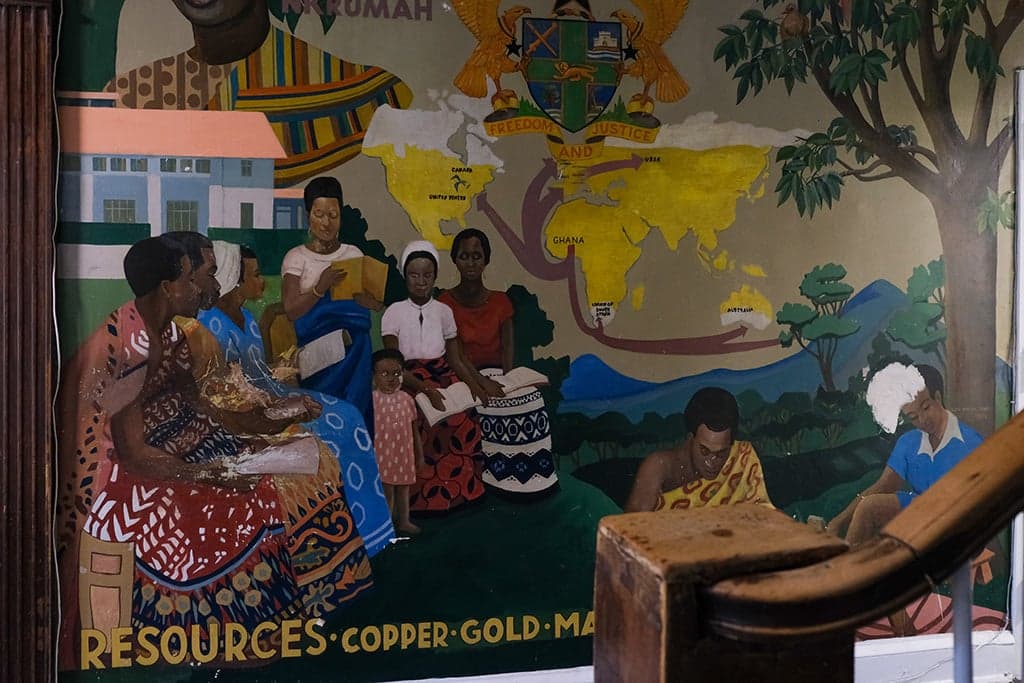
Mural Ghana
Ghana celebrates Ghana’s independence in 1957, featuring imagery tied to nationhood, resources, leadership, and collective identity.
About Loïs Mailou Jones
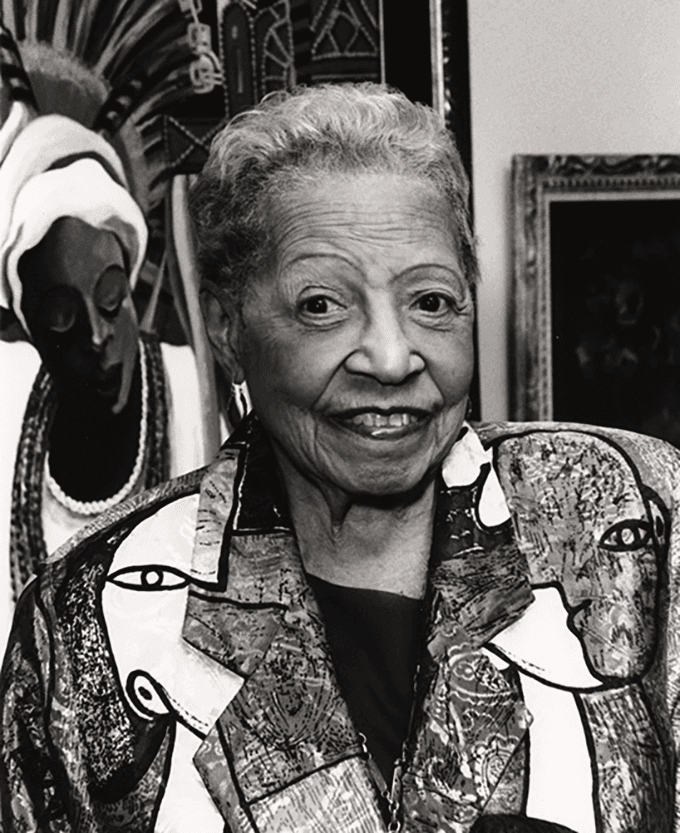
Loïs Mailou Jones (1905–1998) was a groundbreaking African American artist, educator, and cultural ambassador whose career spanned more than seventy years. A longtime professor at Howard University, she played a formative role in shaping generations of Black artists and scholars, helping to define the visual language of African diasporic art in the United States. Her work explored African history, identity, and modernity at a time when such perspectives were largely excluded from mainstream art institutions. Today, Jones’s paintings are held in major collections, including the Smithsonian American Art Museum and the Metropolitan Museum of Art. The murals at Sasha Bruce House reflect her commitment to art as a tool for education, empowerment, and connection across cultures.
About Sasha Bruce House.
Since 1977, the building at 1022 Maryland Avenue NE has been home to Sasha Bruce House—today, Washington, DC’s only emergency shelter for youth under 18. For nearly five decades, the house has offered safety, stability, and care to young people experiencing crisis, family conflict, and homelessness. The murals are located in the main lobby, a space passed through daily by residents, staff, and visitors. Hundreds of young people have encountered these works during moments of profound transition in their lives. This shared history makes the murals deeply intertwined with the mission of Sasha Bruce Youthwork: protection, dignity, and hope. Preserving the murals is not only about safeguarding art and honoring the legacy of Loïs Mailou Jones. It is also about the pride they instill in those young people who find refuge at Sasha Bruce House.